Table of Contents
Your phone rings at six on a Friday evening. Nobody picks up. By Monday morning that caller has already hired someone else.
I’ve watched this happen to small shops and big teams alike. A busy contact center can lose just as many calls as a two person office when call volume spikes and every human agent is already on a line. Customer support takes the first hit. Then the whole customer experience goes with it.
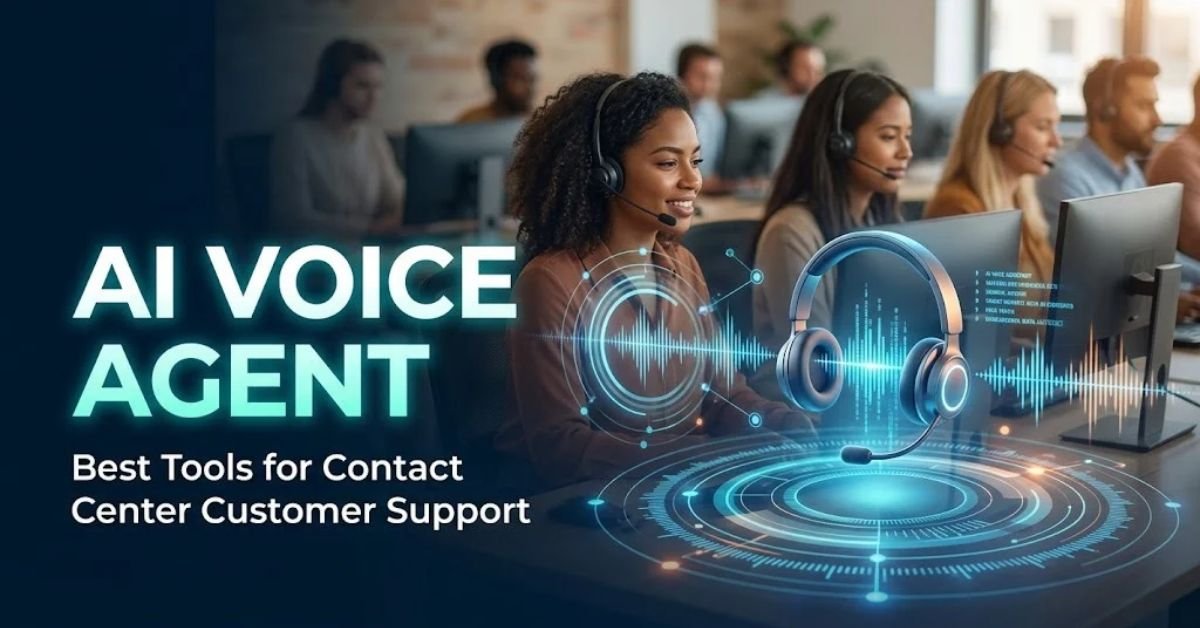
An ai voice agent fills that gap by answering every call and holding a real conversation. It can book a slot or answer a pricing question or pass the caller to a person. That’s the reason ai voice solutions have moved from demo to daily tool so fast.
This article explains what an ai voice agent really is and what it costs. It also covers where it works and where it doesn’t and how the main platforms compare. If you want written chats handled around the clock too you can pair voice with an AI chatbot for business so every channel gets covered.
What Is an AI Voice Agent?
An ai voice agent is software that answers or makes phone calls and talks with people in natural speech. It listens to what the caller wants and replies out loud and then takes action like booking a visit or updating a record. No menu and no button pressing needed.
Under the hood it blends speech recognition with conversational ai and a language model. The caller talks and the system turns that speech into text. Natural language processing and natural language understanding then work out what the person means. A reply gets picked and spoken back in a synthetic voice. Most ai voice agents use that same loop on every turn of the call.
How an AI Voice Agent Differs From a Voice Assistant
A voice assistant on your phone handles one command at a time. Set a timer. Play a song. Done. An ai agent on a live phone line holds a multi-turn conversation instead. It remembers that you said Tuesday three sentences ago and it adapts when you change your mind halfway through.
That memory is the real gap. Strong voice capabilities also cover interruptions and pauses and callers who wander off topic. Early ai voice technology fell apart right there. Modern ai voice agents mostly cope fine and an ai call can now sound surprisingly natural. Some automated call flows are hard to tell from a person on a quiet line.
The ai voice agent space has changed more in the past two years than in the ten before it. I still hear people call these tools glorified phone menus. That view is years out of date. Some vendors even label the same thing an ai phone agent.
AI Voice vs Voice AI: A Quick Note
People treat these two terms like twins and honestly they basically are. AI voice usually points at the sound and the speaking side. Voice ai points at the whole technology stack behind it. You’ll also see conversational voice ai used for the same idea. In day to day talk you can treat them as one thing.
How Does an AI Agent Use Voice AI and Generative AI?
Three layers do the work and each one can fail on its own. Knowing that before you pick a tool saves a lot of pain.
The Stack: Speech to Text and a Language Model and Text to Speech
Speech to text catches what the caller said. A language model decides what to do about it. Text to speech says the answer out loud. Generative ai sits in the middle layer and writes replies on the fly instead of reading from a fixed script.
You can plug in a general-purpose ai model there or a smaller one tuned for your niche. Teams that build agents usually start with the general-purpose option and then add rules around it. I’d do the same. Rules stop a clever model from promising a refund your business doesn’t offer.
Latency and Voice Quality
Delay kills calls. When an agent waits more than about a second before speaking people start talking over it. Voice quality matters too and that covers tone and natural pauses and how the voice handles a name or a street.
Platforms advertise response times from roughly four hundred to eight hundred milliseconds. Those are vendor numbers and nobody audits them. So run your own test calls on a weak mobile signal before you trust any of them.
Why Test Calls Beat Demo Calls
Demos get recorded in quiet rooms. Real callers sit in cars and kitchens and warehouses. Test with noise and accents and half finished sentences.
Connecting External Systems and CRM Platforms
An agent that can’t reach your calendar is just a talker. It needs links to external systems like booking tools and ticket tools and crm platforms. Once it can read and write to your crm every inquiry becomes a record with a name and a time and a next step.
Handling Complex Queries and Customer Sentiment
Complex queries are where most setups crack. A caller asks about three things at once or sounds upset or uses slang. A decent ai solution reads customer sentiment and hands the call to a person before things get ugly.
No tool gets everything right. Learn the real ai capabilities of your chosen ai systems before launch and write down the handoff rules. Those limits decide how much you can safely automate.
AI Voice Agents vs IVR and Call Center Phone Trees
You know the loop. Press one for sales. Press two for billing. Press nine to hear the options again.
Why IVR Frustrate Callers
Old ivr systems and phone trees were built to save staff time and not to help callers. A busy call center can lose people at the menu before anyone speaks to them. That hurts service quality and it quietly wrecks customer journeys that began with a happy click on an ad.
An ai agent skips the menu. The caller just says they need to move an appointment. The system works out the request and can route calls to the right place without a single keypress. Voice ai agents like this shrink the phone system tree to almost nothing. Some vendors sell the result as an ai call center or an automated phone answering system.
Where Rule Based Systems Still Win
Here’s the honest part. If your phone system only needs to split calls into three queues and callers already know what they want then a plain ivr is cheaper and steadier. Rule based flows never wander off script. I’ve seen a team swap a perfectly fine menu for an ai voice agent and regret the extra cost.
| Area | IVR menu | AI voice agent |
|---|---|---|
| Setup | Fast for simple trees | More setup and testing |
| Caller input | Keypad or fixed words | Natural speech |
| Flexibility | Low | High |
| Cost | Low and flat | Usage based per minute |
| Caller experience | Often frustrating | Closer to a real chat |
| Best for | Simple call routing | Varied requests |
Support teams that run both often keep the menu at the top level and put the agent behind it.
Benefits of AI Voice for Contact Center Teams
The benefits of ai in a contact center come down to coverage and speed and focus. None of it needs fancy math.
24/7 Coverage Without Overtime
Calls don’t follow office hours. A high-volume line can get its worst spike at lunch or right after a promotion email goes out. An agent doesn’t get tired or take breaks and it can answer ten calls at once. That’s the cleanest win in ai automation for phones.
Faster Answers and Better Customer Satisfaction
Waiting on hold is the thing people remember. Quick answers lift customer satisfaction because the caller gets help in the first ten seconds. Good ai for customer service also handles the repeat inquiry the same way every time. No mood swings. No lost notes.
Human Agents Focus on Hard Cases
Here’s the part most people miss. The goal isn’t to remove your staff. It’s to take the dull repeat calls off their plate so a human agent can resolve issues that need judgment.
Customer interactions that need warmth or negotiation stay with people. Customer engagement tends to improve when staff finally have time for them. That’s what ai customer service looks like when it’s done right. A simple ai answering service or ai call answering setup is often the first step.
Common Use Cases for Sales and Support
Most common use cases land in sales and support. Every use case starts the same way. Pick the call type that eats the most staff time and begin there.
Inbound: AI Receptionist and Answering Service
An ai receptionist picks up and greets the caller and finds out why they’re calling. A virtual receptionist built this way works as an ai phone answering service for plumbers and clinics and law firms. An ai virtual receptionist also takes messages and answers pricing and opening hours questions. For small teams an ai receptionist for small business is often the first voice project.
Restaurants fit well. A place already running WhatsApp reservation bots through AI automation for restaurants can put the same booking rules behind its phone lines.
Appointment Scheduling and Booking
Appointment scheduling is the easiest win. The agent checks a calendar and offers two slots and confirms one. Appointment booking over the phone used to need a front desk person. Now an ai appointment setter can do it at midnight.
In property work AI automation for real estate already covers instant enquiry replies and viewing bookings. Voice just becomes one more way in.
Outbound: AI Cold Calling and Lead Qualification
Inbound and outbound calls both work. Outbound ai cold calling asks a few qualifying questions and passes warm people to sales. Teams that already run Meta ads and cold email and WhatsApp qualification through an AI lead generation agency sometimes add voice as the last step.
Phone interactions with strangers are the risky part. The legal section further down covers it.
Healthcare Organizations and Regulated Fields
Healthcare organizations can use voice agents for scheduling and reminders but they face strict privacy rules. Check what the vendor offers before patient details go through any ai voice agent. Some vendors keep health privacy features for enterprise plans only. Quick answers to common worries sit in the frequently asked questions near the end.
How to Automate Inbound Call Routing With a Workflow
You can automate an inbound call workflow in six steps. Start small and add rules as you learn.
- Run a triage test. Pull fifty recent calls and sort them into three piles. Simple repeat calls and repeat calls that need a data lookup and calls that need human judgment. Launch the agent on the first two piles only.
- Write a short script with guardrails for prices and promises and refunds.
- Connect your crm and calendar and any other external systems.
- Set call routing rules and a clean handoff to a human agent.
- Test with real noisy calls before going live.
- Read transcripts every week and tune the prompts.
The triage test is the step almost every competitor article skips. It’s also the one that saves the most rework.
Call Routing Rules That Work
Intent based rules send billing questions to one queue and new bookings to the agent. Time based rules let the agent cover nights and weekends while staff take the day shift. VIP rules route calls from known customers straight to a person.
Keep the routing logic short. Ten rules that nobody remembers are worse than three that everybody knows. High-volume lines gain the most because a small routing mistake repeats thousands of times.
CRM Sync and Follow Up Workflow
After every call the agent should log a summary and tag the lead and trigger the next action. That might be a text or an email or a task for a salesperson. Every one of those ai phone calls should leave a record behind.
A pipeline setup like GoHighLevel automation fits here since it handles custom pipelines and workflow steps. Keep your crm clean and the follow up workflow does the rest.
Best AI Voice Agent Platforms Compared
Four names come up in almost every shortlist. Vapi and Retell AI and Bland AI and Synthflow. Dialpad AI agents show up for teams that already run their calls on that phone system. Prices below were checked in July 2026 and they change often so open each pricing page before you commit.
| Platform | Best for | Pricing model | Strength | Limit |
|---|---|---|---|---|
| Vapi | Developers who want control | Five cents a minute platform fee plus provider costs | Bring your own model | Final bill is hard to predict |
| Retell AI | Production call operations | Seven to thirty one cents a minute all in | Managed builder and bring your own model | Cost swings with voice and model |
| Bland AI | Outbound at volume | Eleven to fourteen cents a minute bundled | Closed in house stack | Lower rates need a monthly plan and phone costs are extra |
| Synthflow | Teams that want no code | From about nine cents a minute | Easy visual setup | Fewer deep tweaks |
| Dialpad AI agents | Teams already on Dialpad | Check vendor pricing | Sits inside the phone system they already use | Tied to one ecosystem |
Developer First Builders (Vapi and Retell AI)
The five cent fee from Vapi AI covers orchestration only. Speech and model and phone costs come on top and that’s where budgets drift. Retell AI lists a wider range because the price moves with the voice and model you pick. Both let you bring your own model.
Developers who like tinkering tend to pick Vapi. Teams that want something steady in production without much fuss tend to pick Retell. Vapi includes ten concurrent phone lines on its build plan and charges extra for more.
Enterprise Outbound Focus (Bland AI)
Bland AI runs its own closed stack and bundles the model into one rate. Phone costs stay separate. Lower rates need a monthly plan. It suits outbound campaigns at volume and regulated teams that want a single closed vendor.
No Code Option (Synthflow) and Dialpad AI Agents
Synthflow packages everything into a visual builder. You give up some control and gain speed. Dialpad AI agents make sense if your team already lives in that phone system and wants fewer moving parts.
Best AI Pick by Business Size
For a five person shop the best ai receptionist setup is the one you can launch in a week. That usually means a no code tool. A mid size team with a developer can pick Retell AI or Vapi. High volume outbound leans toward Bland AI. A large contact center on an existing phone vendor should ask that vendor first.
Production-Ready AI for Your Phone Lines: Setup and Compliance
A demo works on a good day. Production-ready ai works on a bad one.
Production-Ready AI Checklist
Before launch I check a short list.
- Does the agent answer in under a second on a weak mobile signal?
- A fallback line that reaches a human agent when the agent gets stuck
- Call logs and transcripts your team can actually find
- A clear notice if you record calls
- Where the data lives and who can see it
None of this is fancy. Skipping it is how a promising pilot turns into a pile of complaints. Service quality drops fast when ai systems fail with no fallback.
Legal Check: AI Cold Calling in the US
In 2024 the FCC ruled that AI generated voices count as artificial voices under the Telephone Consumer Protection Act. That means ai cold calling to mobile numbers generally needs prior express consent from the person. I’m not a lawyer so talk to one before you dial. Fines can get heavy.
AI Receptionist Cost: What Do You Actually Pay?
Most ai voice agents cost somewhere between seven and thirty cents a minute all in once speech and model and phone fees are added up. Advertised rates can look lower because many platforms show only their own fee.
You’ll meet three pricing styles. Usage based per minute plans. Monthly plans with bundled minutes. And one time setup fees for custom builds.
Here’s quick math. Six hundred minutes of calls a month at ten cents a minute is sixty dollars. At thirty cents it’s one hundred eighty dollars. That’s often well under a part time hire. For an ai answering service for small business a per minute plan is usually the safest start since you only pay for calls handled. Your final ai receptionist cost depends on voice and model and phone choices.
Let’s take the busywork off your plate.
Book a free 30-minute call and we’ll map out exactly where automation can save you hours every week — no pressure, no jargon.
Frequently Asked Questions
What is an AI voice agent?
An ai voice agent is software that answers or makes phone calls and holds a natural conversation with the caller. It understands the request and replies out loud and can take action like booking a slot. Unlike an ivr menu it doesn’t need button presses.
How much does an AI receptionist cost?
Most land between seven and thirty cents a minute all in. Your final price depends on the voice and model and phone fees. A busy small office taking six hundred minutes a month might pay roughly sixty to one hundred eighty dollars.
Which is better Vapi or Retell AI or Bland AI?
It depends on who’s building. Vapi suits developers who want control and Retell AI suits teams who want a managed setup for production. Bland AI suits outbound at volume. Test all three with your own call recordings before you pay.
Can an AI voice agent book appointments in my calendar?
Yes if it connects to your calendar through an integration. It checks open slots and offers times and confirms one and can send a reminder. Without that link it can only take a message.
Is AI cold calling legal in the US?
It can be legal but the rules are strict. The FCC treats AI generated voices as artificial under the TCPA so calls to mobile numbers generally need prior express consent. Talk to a lawyer before you start.
Can an AI voice agent replace a human receptionist?
For simple repeat calls yes. For angry or sensitive calls no. Most teams keep a person for those and let the agent cover nights and busy spikes.
What is the difference between an AI voice agent and IVR?
An ivr makes callers press keys or say fixed words. An ai voice agent listens to free speech and answers in context. The first is cheaper for a simple three queue split and the second copes with varied requests.
Does an AI voice agent work for small business?
Yes. It’s often the best fit because a small team can’t staff every call. Start with one call type such as bookings.
Can an AI voice agent handle different accents and languages?
Many platforms cover several languages and accents. Accuracy varies so test with real callers from your area before launch.
How long does setup take?
A basic agent can go live in a few days. Anything with deep crm and calendar links usually takes a couple of weeks including testing.
Does an AI voice agent connect to my CRM?
Yes on most platforms. Check that your specific crm is supported or reachable through an automation tool. The agent can then log calls and tag leads and create tasks.
What happens when the AI cannot answer a question?
A good setup hands the call to a human agent or takes a message and flags it. You should also review the transcript the next day. That’s how you spot gaps in the script.