
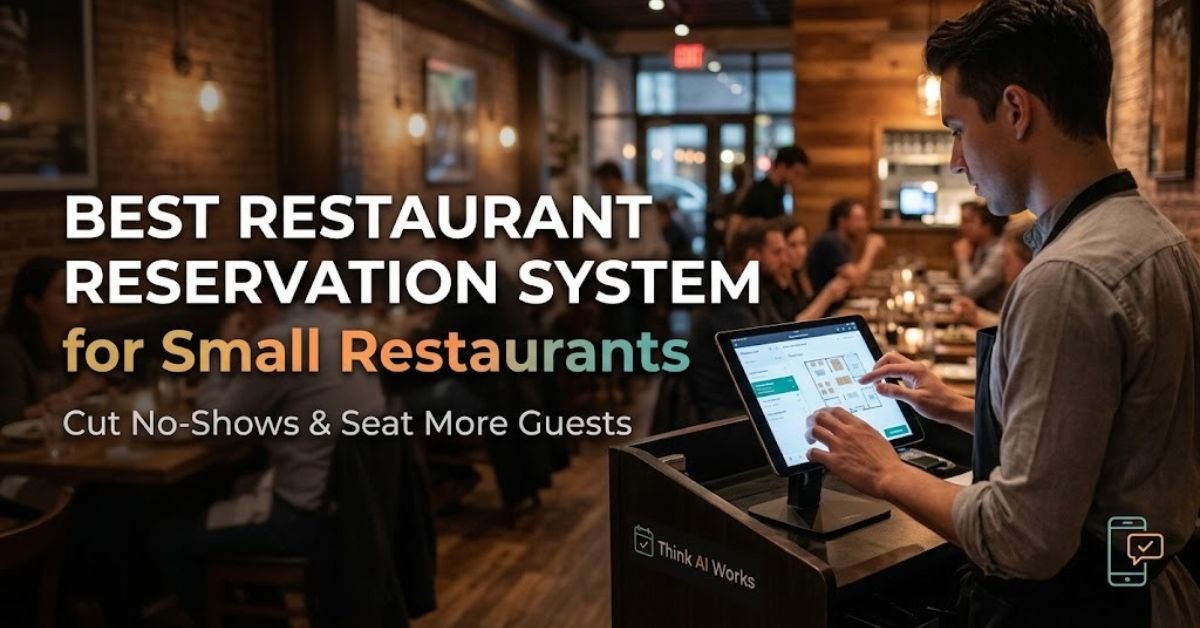
It is 8pm on a Saturday and the best table in the house sits empty. The couple who booked it never showed. Nobody called. Nobody cancelled. And two walk-ins left an hour ago because that table was held.
That one gap costs real money and it happens far more than most owners admit. A good restaurant reservation system closes a big part of it. It holds the booking and sends a reminder and refills the seat when a cancellation comes in. It also helps you turn more tables on a busy night while the guest experience stays smooth from the first click.
Here is what you will get from this article. A plain comparison of the best restaurant reservation systems for small restaurants. The key features worth paying for. A simple plan to cut no-shows. And a look at how automation can answer guests on WhatsApp and ask for reviews after every visit. ThinkAIWorks builds this kind of setup through its AI automation for restaurants service so a lot of what follows comes from how real restaurant teams actually work.
What Is a Restaurant Reservation System and Why Reservation Systems Matter for Booking
A restaurant reservation system is software that lets a diner book a table online while you manage every booking from one screen. It tracks table availability in real-time and sends a reminder before the visit and updates your floor when plans change.
Most reservation systems run on cloud computing. That means your host stand and your phone and your website all see the same book at the same moment. No more double booked tables because someone forgot to cross out a name on paper. I once watched a host lose ten minutes on a Friday night hunting for a pen. Ten minutes is a long time when a queue is forming.
The restaurant industry runs on thin margins so every empty seat matters. Good restaurant technology does not replace warmth. It protects it. When the boring parts run themselves your team can greet a guest at the door and shape the whole dining experience instead of chasing a pen.
How a Booking System Works in Real-Time
Managing reservations on paper breaks down fast. A guest picks a date and a party size and a time. The booking system checks the book instantly and confirms the seat or offers the next open slot. Then it sends a confirmation and later a reminder. Behind the scenes it can sync with your pos so servers see which tables are booked and which are free before the guest even arrives. That live view of tables are booked versus open is what keeps table reservations honest.
Reservation System or Booking System?
Same thing. Different label. Some vendors say reservation software and others say restaurant booking system or online booking tool. What matters is what the tool does for your restaurant reservations and not what it calls itself on a pricing page.
Best Restaurant Reservation Software for Small Restaurants and the Restaurateur on a Budget
Short answer. The best restaurant reservation software for small restaurants is the one that fits your size and your budget and your POS. For many teams that means Toast Tables if you already run Toast or a flat fee tool like Eat App or Resy if you want simple pricing. OpenTable still wins on diner reach. Always check current pricing on each vendor site because plans change often.
Best Restaurant Reservation Systems Compared
| Tool | Best for | Pricing style | No-show tools | POS fit |
|---|---|---|---|---|
| OpenTable | Large diner network | Monthly fee plus cover fees on network bookings | Reminders and card holds | Many POS options |
| Resy | Busy independent venues | Monthly subscription | Reminders and prepaid options | Several POS options |
| SevenRooms | Guest data and CRM | Custom quote | Reminders and deposits | Wide integrations |
| Toast Tables | Toast POS users | Check current Toast plans | Reminders and cancellation rules | Native sync with Toast POS |
| Yelp Guest Manager | Venues already on Yelp | Subscription | Reminders and waitlists | Selected POS options |
| Eat App | Small and mid size venues | Flat monthly fee | Reminders and deposits | Several POS options |
This table shows general patterns. Vendors change plans so confirm the details before you sign anything.
Best Reservation App Picks for a New Restaurant
A new restaurant usually has no guest list yet. So pick a reservation app that builds one from day one. The best reservation tool is user-friendly enough for a part time host to learn in one shift.
Here is what I have seen again and again. The best restaurant reservation setups are the boring ones that staff really use. Restaurant reservation apps with a fancy dashboard and a clumsy host screen get ignored within a month. A powerful restaurant reservation tool earns its price only when your team opens it every service. The right restaurant software is the one your people trust at 7pm on a Friday.
Flat Fee or Cover Fees
A flat fee means the same bill every month. Cover fees mean you pay for each seated diner who books through the network. For a small place doing 40 covers a night those fees can climb fast. A flat fee tends to be the more cost-effective path for most small restaurants.
But cover fees can pay off if the network sends guests you would never meet otherwise. Run the numbers for one busy month before you decide. That is the part most people skip.
Key Features of a Restaurant Booking System That Streamline Restaurant Operations
Plenty of the features of a restaurant booking tool sound great on a demo call. Only a handful change your night. These are the key features I would never skip:
- An online booking widget plus a QR code
- Table management with a live floor plan
- Waitlist management that handles walk-ins too
- Guest profiles with history and preferences
- Analytics you will really read
- Multi-location control if you run more than one site
- A mobile app that works at the host stand
Booking Widget and QR Code
Your booking widget should sit on your website and your Google listing and your Instagram bio. Add a QR code to the window and the menu and the receipt so a guest can book online before they leave. It is a tiny thing but it fills slow midweek tables more than people expect.
Table Management and Waitlist Management
Good table management shows your restaurant tables as a live map. You see who is seated and who is late and which table frees up next. Waitlists matter just as much. When a booking is cancelled the system can offer that slot to the next waiting party without a single phone call.
Guest Profiles and Guest Data
Guest profiles store guest history and guest preferences like a nut allergy or a favorite booth. When a regular walks in your host already knows. Over time that guest data turns reservation and guest management into something that feels personal and not robotic.
Analytics and Multi-Location Control
Analytics show your busiest hours and your no-show rate and your average party size. If you run several venues a multi-location view keeps every site on the same rules. You stop guessing and start deciding.
Mobile App for Front-of-House
Your host should be able to take a booking from a phone in the middle of the room. A solid mobile app keeps front-of-house fast and keeps eyes on guests and not on a desk. Pick a reservation platform that lets staff do all of this without a manual.
Fewer No-Shows With Smarter Reservation Management
To reduce no-shows send two reminders and ask for a card or deposit on busy nights and keep a waitlist ready to refill cancelled tables. Those three habits do most of the work.
Reservation management is where a booking tool earns its fee. Here is how I would set it up.
Reminders by SMS and Email
Send one reminder about a day before and a second a few hours before. SMS gets read faster than email so lead with it. Ask the guest to confirm with one tap. A guest who taps confirm tends to show up more often than one who stays silent.
Cancellation Policy and Upfront Payments
Set a clear cancellation window and say it in the confirmation message. For large parties or peak nights ask for upfront payments or a card hold. Some guests will grumble. Most understand.
Honest trade-off though. Strict deposits can scare off casual diners so save them for your hardest nights.
Waitlists That Refill Cancelled Tables
When a cancellation lands let the system text the waitlist. First to reply takes the seat. A loss turns into a sale in about two minutes.
What One No-Show Really Costs
Try what I call Empty Seat Math. Multiply no-shows per week by party size by average spend by 52 weeks. Say you get 6 no-shows a week with 2 guests each and 30 dollars spent per guest. That is 360 dollars a week and 18720 dollars a year.
Those are made up numbers but your own will probably sting too. Cut that loss in half with better reminders and you win back about 9360 dollars. Fewer no-shows is the cheapest growth you will ever buy.
Online Booking on WhatsApp and the Phone: Automation for the Online Restaurant
Yes you can take reservations on WhatsApp. A WhatsApp Business bot can ask for the date and the party size and then write the booking straight into your system.
WhatsApp Booking Flow
In many markets guests message a restaurant before they ever open a website. A bot answers in seconds at 2am and holds the details until staff wake up. ThinkAIWorks builds these flows through its WhatsApp automation for business work and the idea is simple. Staff handle people and software handles repeat questions.
One honest limit. Bots need an easy hand off to a human for odd requests like a birthday setup.
AI Phone Answering for Restaurants
Phones ring hardest during service when nobody can pick up. AI phone answering for restaurants can take a booking or share opening hours and pass tricky calls to staff. It is still young tech so test it before you trust it on a Friday.
Restaurant Chatbot and AI Restaurant Ordering
A restaurant chatbot on your site and Instagram can answer simple questions and collect a reservation online. Some also handle AI restaurant ordering for takeaway. Our AI chatbot for business service covers WhatsApp and website and Instagram and Messenger bots. That is what an automated restaurant looks like when it works. Guests book online in the channel they already use and the online reservation lands in your book without a retype.
Free Restaurant Reservation Software and OpenTable Alternatives Like Eat App
Yes there are free alternatives to OpenTable but free plans usually come with limits. Some tools offer a free or low cost starter plan and others only give a trial. Always confirm what you get before you build your whole book around it.
What Free Plans Really Include
Look for caps on monthly bookings and missing SMS reminders and vendor branding on your widget. A free restaurant reservation system that skips reminders can cost more in lost tables than it saves in fees.
When Paid Beats Free
If you lose even two tables a week to no-shows a paid plan with reminders usually pays for itself. That is Empty Seat Math again.
OpenTable Alternatives at a Glance
| Option | Good fit | Watch out for |
|---|---|---|
| Eat App | Small venues that want a flat fee | SMS limits on each plan |
| Resy | Independent venues with steady demand | Monthly terms and extras |
| Toast Tables | Teams already on Toast POS | Tied to the Toast setup |
| Yelp Guest Manager | Venues with strong Yelp traffic | Fewer marketing extras |
| SevenRooms | Guest data focused groups | Custom pricing |
Any of these restaurant booking software options can work. The best one is the one that matches how your floor really runs.
Grow Your Business With Reviews Loyalty and a Restaurant CRM
To automate review requests send a message by SMS or WhatsApp about two hours after the visit with a direct Google review link. Keep it short and thank them by name.
Hospitality does not end when the bill is paid. A short thank you and a review link keeps the evening alive in the guest mind. If you want a clear starting point on how to get more google reviews for restaurant visits this is it. Ask while the meal is still a good memory.
A restaurant loyalty program built from guest history helps turn first timers into regulars. Offer a free dessert on the fifth visit or early access to a seasonal menu. Pair it with restaurant email marketing and restaurant SMS marketing and you can send a targeted email to guests who have not booked in two months.
A restaurant CRM stores who visited and when and what they liked. Restaurant automation software then uses that record to trigger messages on its own. That is restaurant marketing automation in plain words. We often build these pipelines inside GoHighLevel automation so one system holds every guest touchpoint.
How to Choose an Efficient Restaurant Booking System
Five questions will narrow the field fast:
- How many covers do you seat on your busiest night?
- Which POS do you run and does the tool sync with it?
- What can you spend each month without stress?
- Which channels do guests use to reach you?
- What are your restaurant needs that a basic tool cannot meet?
Then book two demos and ask how the tool tracks turnover and how it handles a double booking. Ask what happens when the internet drops. An efficient restaurant keeps running even on a bad night.
Most small restaurants can go live in a few days. Plan an hour to load your floor plan and another to write your reminder messages. Strong restaurant operations start with small setup choices like these. And if you run a purely online restaurant concept the same rules apply to your pickup slots.
Let’s take the busywork off your plate.
Book a free 30-minute call and we’ll map out exactly where automation can save you hours every week — no pressure, no jargon.
Frequently Asked Questions About Restaurant Reservation Systems
What is the best reservation system for a small restaurant?
The best one matches your size and your POS and your budget. Eat App and Resy and Toast Tables are common picks for small restaurants. Compare a flat fee against cover fees before you choose.
How do I reduce restaurant no-shows?
Send two reminders and ask guests to confirm. Use a card hold or deposit on peak nights. Keep a waitlist ready so cancelled tables get refilled fast.
Can I take reservations on WhatsApp?
Yes. A WhatsApp Business bot can collect the date and party size and confirm the booking. Add an easy hand off to staff for special requests.
Are there free alternatives to OpenTable?
Some tools offer free or low cost starter plans and others give a trial. Free plans often limit bookings or SMS reminders. Read the fine print first.
How do I automate review requests after a visit?
Trigger an SMS or WhatsApp message about two hours after the visit. Include a direct Google review link and keep the note short.
What is the difference between a reservation system and a booking system?
Almost nothing. Vendors use both names for software that manages table availability and guest bookings.
How much does a restaurant reservation system cost?
It depends on the vendor and the plan. Some charge a monthly fee and others add cover fees. Check current pricing on each official site.
Does reservation software connect to my POS?
Many tools sync with popular POS systems. Toast Tables works with Toast POS. Always ask for a live demo of the sync.
Can AI answer restaurant phone calls and take bookings?
Yes in many cases. AI phone answering can handle simple bookings and questions. Test it during a quiet shift first.
Do I need a restaurant CRM with my reservation software?
Not on day one. But once you have a few hundred guest records a CRM helps you send better messages and run a loyalty program.
Can I charge a deposit or cancellation fee for no-shows?
Yes with most tools. State the policy clearly in the confirmation. Use it for large parties and busy nights so you do not scare off casual guests.
How long does setup take?
Many small restaurants go live within a few days. Loading the floor plan and writing messages takes a few hours.